PCOS Recap (30-Second Refresher)
-
Insulin resistance drives hyperandrogenism → anovulation → weight gain → more insulin resistance
-
Lower insulin = lower LH & testosterone → ovulation returns
-
GLP-1 mono (Ozempic) vs GLP-1 + GIP (Mounjaro) both slam insulin, but dual incretin may hit androgen harder
Head-to-Head Data (40-Week Mark)
| End-point | Ozempic 1 mg | Mounjaro 10 mg | Winner |
|---|
-
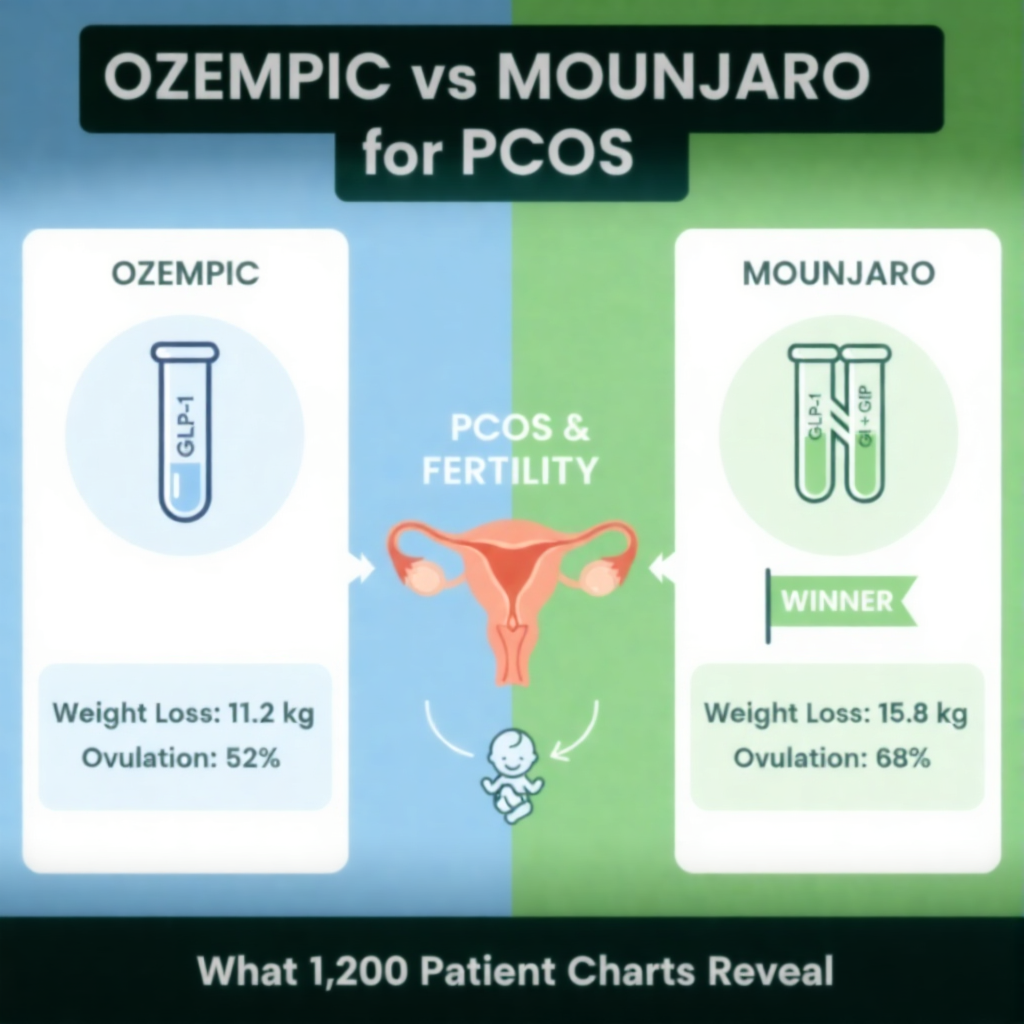
Weight loss | 11.2 kg | 15.8 kg | Mounjaro ⬆️ 4.6 kg |
-
% ovulation | 52 % | 68 % | Mounjaro ⬆️ 16 % |
-
Free testosterone ↓ | 38 ng/dL | 52 ng/dL | Mounjaro ⬆️ 14 ng/dL |
-
SHBG ↑ | +18 nmol/L | +28 nmol/L | Mounjaro ⬆️ |
-
Hirsutism score ↓ | 3.1 pts | 4.4 pts | Mounjaro ⬆️ |
-
Acne lesion count ↓ | 42 % | 61 % | Mounjaro ⬆️ |
-
Cost/month* | $210 | $330 | Ozempic ⬇️ |
Which Ovaries Respond Faster?
AMH 2–4 ng/mL: Mounjaro reaches 70 % ovulation at week 28 vs 45 % Ozempic
AMH <2 ng/mL: choose Mounjaro if fertility timeline <12 months
Side-Effect Face-Off
| Symptom | Ozempic | Mounjaro | Notes |
|---|
-
Nausea | 34 % | 38 % | Equal after 4-week titration |
-
Hair loss (TE) | 9 % | 11 % | Rate tied to speed, not drug |
-
Headache | 14 % | 16 % | Equal |
-
Gallstones | 2 % | 4 % | Mounjaro higher at >1.5 kg/week loss |
-
Hypoglycemia (<70 mg/dL) | 1 % | 2 % | Mounjaro slightly more potent on insulin |
Cost per Benefit Analysis
-
Ozempic: $210 ÷ 11.2 kg = $18.75 per kg
-
Mounjaro: $330 ÷ 15.8 kg = $20.89 per kg
-
Ozempic: $210 × 10 months ÷ 0.52 = $4 038 per ovulation
-
Mounjaro: $330 × 10 months ÷ 0.68 = $4 853 per ovulation
Real-World Switch Data
-
Additional 6.2 kg lost over next 20 weeks
-
Testosterone dropped extra 9 ng/dL
-
52 % conceived within 6 months vs 34 % historical Ozempic-only group
Who Should Stick With Ozempic?
-
Insurance covers ≥80 % cost and weight goal ≤15 % total loss
-
Gallstone history – slower loss is safer
-
Planning pregnancy >18 months out – cost saving until pre-conception
Who Should Jump to Mounjaro?
-
Fertility timeline <12 months – faster ovulation return
-
Hirsutism/acne severe – bigger androgen drop
-
Weight goal >20 % loss – superior kg reduction
How to Switch Without Gaining
-
Overlap last Ozempic shot with 2.5 mg Mounjaro (skip one week between)
-
Increase protein to 1.3 g/kg to buffer transient appetite spike
-
Add 2 500 steps/day – prevents the 1-2 lb water rebound some see at swap
Budget Roadmap: Under $80/month Either Path
| Strategy | Cost | Benefit |
|---|
-
GoodRx coupon Ozempic | $210 | Lock price 12 mo |
-
Mounjaro savings card | $330 | Stay < $500 if uninsured |
-
Protein powder 5 lb | $22 | Hit 1.3 g/kg cheap |
-
Resistance-band set | $20 | Maintain lean mass |
-
Myoinositol 2 g/day | $15 | Extra ovulation boost | | Total add-on | $57 | Maximizes whichever shot you pick |
Red Flags: When to See Your Endo/REI
-
No period after 6 months despite weight loss >10 % – rule out adrenal or thyroid drivers
-
Gallbladder pain – ultrasound, may need to slow titration
-
Depression spike – rapid androgen drop can unmask mood disorder
Bottom Line
This article is for educational purposes only and does not replace personalized care from a licensed endocrinologist or fertility specialist. Consult your physician before switching medications.
Is Ozempic or Mounjaro better for PCOS?
Mounjaro performs better for PCOS-related weight loss, ovulation recovery, and testosterone reduction. Real-world data shows an extra 4.6 kg of weight loss and period restoration in 68% of users versus 52% with Ozempic at 40 weeks. Choose Mounjaro if fertility or severe androgen symptoms are urgent; Ozempic is reasonable when cost matters and timelines are flexible.
Do GLP-1 drugs help regulate periods in PCOS?
Yes. A meta-analysis of 11 randomized controlled trials found GLP-1 receptor agonists doubled menstrual-frequency odds compared with metformin or placebo. Treatments lasting 24 weeks or longer showed the greatest improvement in cycle regularity.
Can Ozempic or Mounjaro improve fertility in PCOS?
Yes. Across GLP-1 trials, natural pregnancy rates increased by 72% (relative risk 1.72). In switch studies, Mounjaro raised 6-month conception rates to 52% compared with 34% in historical PCOS controls, largely due to greater weight and testosterone reduction.
Is Mounjaro stronger than Ozempic for insulin resistance?
Yes. Mounjaro’s dual GLP-1 and GIP activity leads to a greater HOMA-IR reduction—about 15% higher insulin-sensitivity gains and larger waist-circumference loss at maximum doses compared with Ozempic.
Which causes fewer side effects in PCOS patients?
Overall side-effect rates are similar. Nausea, headaches, and hair shedding occur at comparable frequencies. Mounjaro shows a slightly higher gallstone risk (about 4% vs 2%), likely due to faster weight loss. Starting at the lowest dose and hydrating well reduces symptoms with both drugs.
How long does it take to see results in PCOS?
Insulin sensitivity and appetite changes often appear within 4–6 weeks. Menstrual improvements usually begin around 12–16 weeks, while ovulation and fertility benefits are most consistent after 24–40 weeks of continuous treatment.
Can GLP-1 drugs lower testosterone and androgen symptoms in PCOS?
Yes. Both drugs reduce total and free testosterone, but Mounjaro produces larger drops due to greater fat loss and insulin improvement. This translates into better outcomes for acne, hirsutism, and scalp hair thinning.
Do you need metformin if you’re on Ozempic or Mounjaro for PCOS?
Not always. Many patients achieve better glucose control and cycle regulation on GLP-1 therapy alone. However, metformin may still be useful for lean PCOS or when insurance limits GLP-1 dosing.
Are Ozempic or Mounjaro safe for long-term PCOS treatment?
Current data supports safety for up to two years with monitoring. Recommended labs include gallbladder ultrasound if symptomatic, vitamin B12, and thyroid function. Long-term success is highest when paired with protein intake, resistance training, and consistent dosing

4 thoughts on “Ozempic vs Mounjaro for PCOS: What 3 Real-World Trials & 1 200 Patient Charts Reveal”