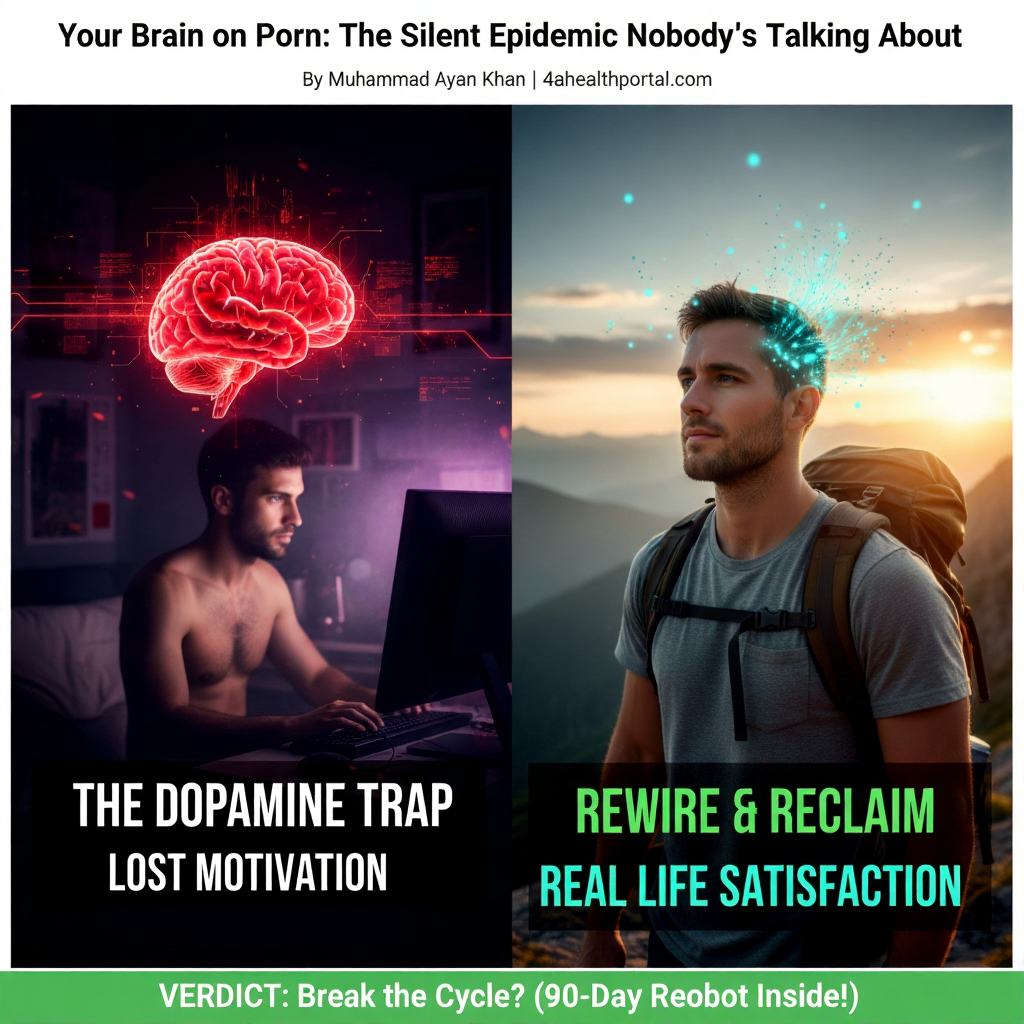
Your Brain on Porn: The Silent Epidemic Nobody’s Talking About
By Muhammad Ayan Khan | 4ahealthportal.com
What if I told you that something millions of people do daily is rewiring their brain in the same way cocaine does? What if this habit is silently destroying relationships, crushing motivation, and stealing the best years of people’s lives—and hardly anyone is talking about it?
We need to have an honest conversation about pornography and its impact on mental health, relationships, and quality of life. This isn’t about morality or judgment—this is about science, brain health, and reclaiming control over your life.
The Uncomfortable Truth: What’s Really Happening
In 2025, pornography is more accessible than ever before. The average age of first exposure is now between 9-11 years old. With unlimited high-speed internet access, what previous generations experienced occasionally has become a daily (or hourly) habit for millions.
But here’s what most people don’t realize: your brain wasn’t designed for this level of stimulation. The consequences are real, measurable, and affecting more people than you might think.
How Pornography Hijacks Your Brain
The Dopamine Trap
Your brain operates on a chemical reward system, with dopamine as the primary “feel-good” neurotransmitter. Natural rewards like food, exercise, and social connection release dopamine in moderate amounts. Pornography, however, floods your brain with dopamine levels comparable to drugs like cocaine and methamphetamine.
Here’s the problem: your brain adapts. With repeated exposure to these unnaturally high dopamine surges, your brain reduces dopamine receptors to protect itself. This process, called desensitization, means you need more stimulation to feel the same pleasure. Normal life activities that used to bring joy—hobbies, time with friends, achievements—no longer feel rewarding.
The Escalation Cycle
As your brain becomes desensitized, many people find themselves needing more extreme content to achieve the same effect. What started as curiosity can escalate into hours of daily use, increasingly shocking material, or content that doesn’t align with your actual values or interests.
This isn’t a moral failing—it’s neuroscience. Your brain is simply seeking the dopamine hit it’s been conditioned to expect.
Addiction Pathways
Brain imaging studies show that the patterns of brain activity in people with compulsive pornography use mirror those seen in drug addiction. The prefrontal cortex (responsible for decision-making and impulse control) shows reduced activity, while the reward centers become hyperactive at the mere thought of pornography.
The Real-Life Consequences Nobody Warns You About
1. Erectile Dysfunction in Young Men
One of the most alarming trends: erectile dysfunction rates among men under 40 have skyrocketed in recent years. Studies indicate that 20-30% of young men now experience porn-induced erectile dysfunction (PIED).
The mechanism is simple but devastating. When your brain becomes conditioned to artificial stimulation on a screen, real-life intimacy doesn’t provide enough stimulation to trigger arousal. Many young men report being unable to perform with real partners despite having no physical health issues.
2. Relationship Destruction
Pornography use is consistently linked to relationship problems:
- Decreased satisfaction: Partners report feeling inadequate, betrayed, or compared to unrealistic standards
- Reduced intimacy: Emotional connection suffers as one partner withdraws into secret consumption
- Trust erosion: The secretive nature of compulsive use damages honesty and vulnerability
- Unrealistic expectations: Pornography creates false beliefs about sex, bodies, and relationships
Research shows that regular pornography use is associated with higher divorce rates and lower relationship satisfaction across all age groups.
3. Mental Health Decline
The mental health impacts are profound:
- Depression: Users report feeling empty, numb, and disconnected from life
- Anxiety: Social anxiety increases as real-world interactions become more challenging
- Shame and guilt: The cycle of use followed by regret creates psychological distress
- Low self-esteem: Comparing yourself to performers or feeling out of control damages self-worth
- Isolation: Time spent consuming pornography replaces meaningful social connections
4. Motivation Collapse
Many people describe a “flatline” period where nothing in life feels exciting or worthwhile. This anhedonia (inability to feel pleasure) extends beyond sexual function:
- Career ambitions fade
- Hobbies lose their appeal
- Exercise feels like a chore
- Social events seem boring
- Life feels gray and meaningless
This happens because your dopamine system has been so overstimulated that normal rewards no longer register as pleasurable.
5. Time Theft
Calculate this: If someone spends just one hour daily on pornography, that’s 365 hours per year—over 15 full days. Many users report spending 2-4 hours daily, which translates to 1-2 months of waking hours annually.
That’s time stolen from:
- Building meaningful relationships
- Advancing your career
- Pursuing passions and hobbies
- Physical fitness and health
- Personal growth and learning
6. Warped Sexual Template
Your brain learns what to find arousing through experience. Repeated exposure to pornography can create a sexual template that doesn’t match real-life intimacy. This can lead to:
- Preference for screen-based arousal over real partners
- Difficulty connecting emotionally during physical intimacy
- Performance anxiety
- Fetishes or preferences that developed artificially
- Disconnect between your values and your arousal patterns
The Denial Trap: “I Can Stop Anytime”
One of the most dangerous aspects of compulsive pornography use is the belief that you’re in control. Many people think:
- “I only do it when I’m stressed”
- “It’s not affecting my life”
- “Everyone does it”
- “I can stop whenever I want”
If you genuinely believe you can stop anytime, try this: commit to 90 days without pornography. No peeking, no “just once,” no exceptions. If you can’t do it, or if you find yourself making excuses for why you don’t need to try, that’s your answer.
Warning Signs You Might Have a Problem
- You’ve tried to stop or cut back but couldn’t
- You’re spending increasing amounts of time viewing pornography
- You’re missing work, social events, or responsibilities due to use
- You need more extreme content to achieve the same effect
- You feel ashamed or guilty after use but continue anyway
- Your relationship or sex life is suffering
- You hide your usage from others
- You feel irritable or restless when you can’t access it
- Real-life sexual encounters feel less satisfying or don’t work
- You’ve noticed a decline in motivation or enjoyment of other activities
The Path to Recovery: Reclaiming Your Life
Step 1: Acknowledge the Problem
You can’t fix what you won’t admit is broken. Be honest with yourself about how pornography is affecting your life. Write down specific ways it’s impacting you—relationships, time, mental health, self-esteem.
Step 2: Commit to a Reboot Period
Many people benefit from a “reboot”—typically 90 days without pornography. This gives your brain time to reset and heal. During this period:
- Your dopamine receptors begin to recover
- Your brain rewires to find pleasure in normal activities
- Sensitivity to real-life rewards returns
- Mental clarity improves
Step 3: Remove Access and Triggers
- Install website blockers and accountability software
- Delete social media apps that trigger urges
- Avoid situations where you typically used pornography
- Remove private browsing capabilities
- Create an accountability partnership with someone you trust
Step 4: Fill the Void
Pornography often fills time and provides escape from stress, boredom, or difficult emotions. Replace it with healthier activities:
- Exercise (especially important for mood and dopamine regulation)
- Social connections and meaningful relationships
- Creative hobbies
- Meditation and mindfulness practices
- Learning new skills
- Volunteering or helping others
Step 5: Address Underlying Issues
Many people use pornography to cope with:
- Stress and anxiety
- Loneliness or social isolation
- Depression
- Trauma or past experiences
- Low self-esteem
- Relationship problems
Consider working with a therapist who specializes in sexual health or addiction. Addressing root causes makes long-term recovery more sustainable.
Step 6: Practice Self-Compassion
Recovery isn’t linear. Many people experience setbacks. What matters is your overall trajectory and commitment to change. Shame and self-criticism actually make relapse more likely, while self-compassion and learning from mistakes support lasting change.
What Recovery Looks Like
People who successfully quit pornography consistently report:
- Mental clarity: Brain fog lifts, focus improves, memory sharpens
- Energy return: Motivation and drive come back naturally
- Emotional depth: Ability to feel emotions fully returns
- Improved relationships: Deeper connections and authentic intimacy
- Self-respect: Pride in self-control and alignment with values
- Time abundance: Reclaimed hours lead to personal growth
- Sexual function restoration: For those with PIED, normal function typically returns
- Life satisfaction: Overall happiness and contentment increase
The timeline varies by individual, but most people notice significant improvements within 3-6 months.
Resources for Support
If you’re struggling with compulsive pornography use, you’re not alone and help is available:
- Certified Sex Addiction Therapists (CSATs): Professionals specializing in this area
- Support groups: Online and in-person communities of people in recovery
- Accountability apps: Technology tools designed to support your goals
- Educational resources: Books, podcasts, and websites focused on recovery
Important Note: If you’re experiencing severe depression, anxiety, or suicidal thoughts related to pornography use, please seek immediate professional help. Contact a mental health crisis line or speak with a healthcare provider.
The Bottom Line
Pornography isn’t just “harmless fun” for millions of people—it’s a compulsive behavior that’s hijacking their brain’s reward system, destroying relationships, stealing time, and diminishing their quality of life.
The good news? Your brain has remarkable neuroplasticity. It can heal, rewire, and recover. People who quit pornography consistently report that their only regret is not quitting sooner.
You have one life. Don’t let it be stolen by pixels on a screen.
If you’re ready to take back control, the best time to start is right now. Your future self will thank you.
About the Author: Muhammad Ayan Khan is a health content writer committed to addressing challenging health topics with evidence-based information and compassion.
Medical Disclaimer: This article is for informational purposes only and does not constitute medical advice or diagnosis. If you’re struggling with compulsive behaviors, mental health concerns, or relationship issues, please consult with qualified mental health professionals. If you’re experiencing a mental health crisis, contact emergency services or a crisis helpline immediately.
Have you or someone you know struggled with these issues? Recovery is possible. Share this article with someone who might need to read it, and subscribe to 4ahealthportal.com for more honest conversations about health topics that matter.

One thought on “Your Brain on Porn: The Silent Epidemic Nobody’s Talking About”